
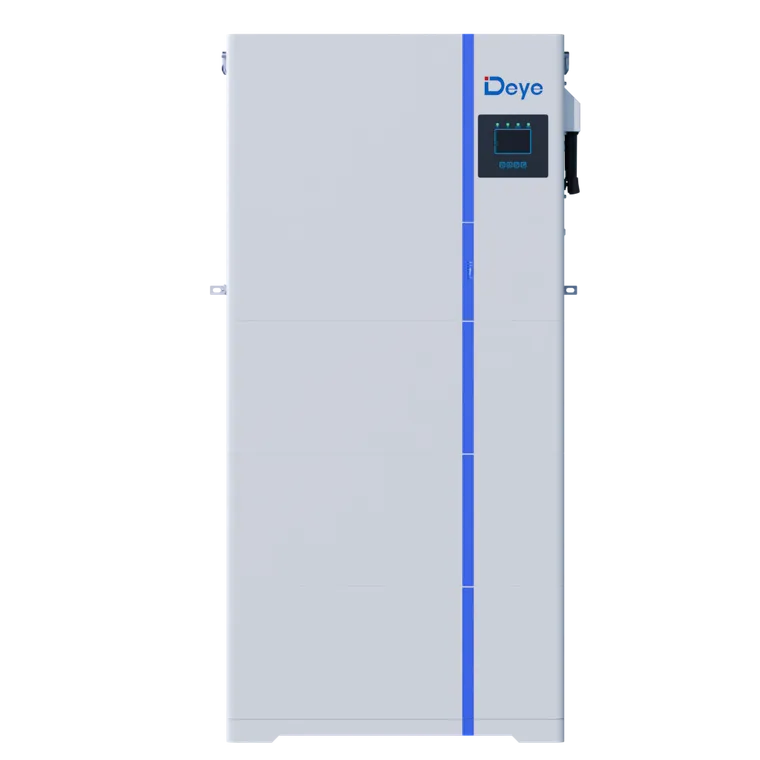
AI-W5.1 All-in-One BESS · 3.6–12 kW + up to 50 kWh
AI-W5.1-B-ESS (Spring Series)
3.6–12 kW
Complete all-in-one energy storage system — a Deye hybrid inverter plus stackable AI-W5.1-B LFP batteries in one floor-standing stack. 3.6–10 kW single-phase or 5–12 kW three-phase, 5–50 kWh tool-free storage, 4 ms backup switchover. Suncloud's most popular residential BESS.
- System
- Hybrid inverter + battery (all-in-one)
- Inverter power
- 3.6–10 kW (1-phase) · 5–12 kW (3-phase)
- Battery
- AI-W5.1-B · 5.12 kWh modules → 5–50 kWh
- Backup switchover
- 4 ms
- Chemistry
- LiFePO4 (cobalt-free)
- Stacking
- Tool-free · up to 5 modules under the inverter
- Grid standard
- AS/NZS 4777.2
- Warranty
- 10 years (every AU model, incl. 7P1 and 10P1)
Specifications
System
- Architecture
- 6-in-1: EMS, battery PCS, battery pack, solar inverter, gateway & DC bus built-in
- Inverter power (single-phase)
- 3.6 / 5 / 6 / 7 / 7.6 / 8 / 10 kW
- Inverter power (three-phase)
- 5 / 6 / 8 / 10 / 12 kW
- Scalable energy
- 5.12 kWh per module → up to 50 kWh per system (Deye's recommended maximum)
- Backup switchover
- 4 ms
- Inputs
- Solar + Generator + Grid + EPS + EMS
- Monitoring
- App · PC · touchscreen LCD on the inverter (the PDU has indicator LEDs only)
Battery
- Battery module
- AI-W5.1-B — 5.12 kWh LFP (full specs on the battery page)
- Modules per stack
- 1–5 on the inverter stack (PDU3) · 1–6 on a battery-only stack (PDU1)
- Linking stacks
- PDU to PDU through the built-in DC bus — no external combiner box (Deye's brochure pictures four stacks chained); confirm larger systems with Suncloud
Inverter (electrical)
- Battery voltage
- 40–60 V
- Max. PV input voltage
- 500 V (1-ph) · 800 V (3-ph)
- MPPT voltage range
- 150–425 V (1-ph) · 200–650 V (3-ph)
- MPP trackers
- 2
- Grid voltage
- 230/240 V (1-ph) · 230/400 · 240/415 V (3-ph)
- Peak power (off-grid)
- 2× rated, 10 s
General
- Communication
- WiFi / Web / GPRS / App
- Warranty
- 10 years. Deye's AU/NZ SUN Series warranty (V2.17, July 2026, p.3) lists all 12 AU models, 3.6P1 to 10P1 and 5P3 to 12P3. Deye's all-in-one inverter warranty (Ver1.0) lists all of them except the 7P1 and 10P1
Highlights
- All-in-one system — a Deye hybrid inverter and stackable AI-W5.1-B LFP batteries in a single floor-standing stack. This page covers the system; full battery specs are on the AI-W5.1-B battery page.
- 6-in-one integrated design — hybrid inverter, battery PCS, battery pack, solar inverter, gateway and DC bus all built in. Stacks link PDU to PDU through the built-in parallel interface, with no external combiner box.
- Tool-free stacking — expand from 5 kWh to 50 kWh (Deye’s recommended maximum) by adding 5.12 kWh modules (up to five under the inverter, then battery-only stacks of up to six); one-click setup.
- 4 ms seamless switchover to backup for genuine energy security during outages.
- Single- or three-phase inverter (3.6–10 kW 1-ph / 5–12 kW 3-ph) from one product family.
- 10 kW single-phase now available —
AI-W5.1-10P1-AU-B, the largest single-phase unit in the range.
Single-phase lineup (AU)
All single-phase models share one user manual and the same PDU, base and battery stacking. Figures below are from the datasheet table in Deye’s AU single-phase manual (V1.1.1, 9 July 2026).
| 3.6P1 | 5P1 | 6P1 | 7P1 | 7.6P1 | 8P1 | 10P1 | |
|---|---|---|---|---|---|---|---|
| Rated AC in/out power (W) | 3600 | 5000 | 6000 | 7000 | 7600 | 8000 | 9999 |
| Max. apparent power (VA) | 3600 | 5000 | 6000 | 7000 | 7600 | 8000 | 9999 |
| Rated AC current (A) | 15.7 | 21.8 | 26.1 | 30.5 | 33.1 | 34.8 | 43.5 |
| Max. battery charge/discharge (A) | 90 | 120 | 135 | 175 | 190 | 190 | 210 |
| Max. PV access power (W) | 7200 | 10000 | 12000 | 14000 | 15200 | 16000 | 20000 |
| Max. PV input power (W) | 5760 | 8000 | 9600 | 11200 | 12160 | 12800 | 16000 |
Full model codes take the form AI-W5.1-<rating>P1-AU-B. Common to every single-phase model: 40–60 V
battery (1 input), 500 V max PV input, 125–500 V PV input range, 150–425 V MPPT, 230/240 V L+N+PE,
97.6% max efficiency, IP65, floor-mounted.
Every model in the table carries a 10-year warranty. Deye’s AU/NZ SUN Series warranty (V2.17, July 2026) lists all seven single-phase models, including the 7P1 and 10P1. Deye’s all-in-one inverter warranty (Ver1.0, for installations outside Europe) lists the 3.6, 5, 6, 7.6 and 8P1 and covers the LCD and cooling fan for the full ten years. The 7P1 and 10P1 are listed only in V2.17, whose second five years cover parts only, excluding the LCD, fan and labour.
AI-W5.1-10P1-AU-B — the 10 kW single-phase
- 9999 W / 9999 VA (the 10 kW class); rated and max AC current 43.5 A
- 20 kW max PV access (16 kW max PV input) — 2 MPP trackers, 2+2 strings, 32+32 A max operating PV current
- 210 A max battery charge/discharge — the highest in the single-phase range
- 50 A max continuous AC passthrough (grid→load); max output fault current 100 A; OCP 140 A
- Full-load MPPT range 250–425 V; 48+48 A max input short-circuit current
- Peak power 2× rated for 10 s; 97.6% max efficiency (96.5% Euro, >99% MPPT)
- Warranty: 10 years, as listed in Deye’s AU/NZ SUN Series warranty (V2.17, July 2026, p.3)
Typical configuration
- Main system (with inverter): 1 × hybrid inverter + 1 × PDU3 + 1–5 battery modules + 1 × Base (5.12–25.6 kWh). The inverter stack holds at most five modules.
- Battery-only stack (PDU1): 1 × PDU1 + 1–6 battery modules + 1 × Base (5.12–30.72 kWh) — a standalone stack that adds storage without another inverter
- Two stacks: PDU3 + PDU3, or PDU3 (master) + PDU1 (slave) — parallel modes 1 and 2 in Deye’s AU PDU1/PDU3 user manual (issue 03); its mode 3 adds an external inverter to the PDU1 stack
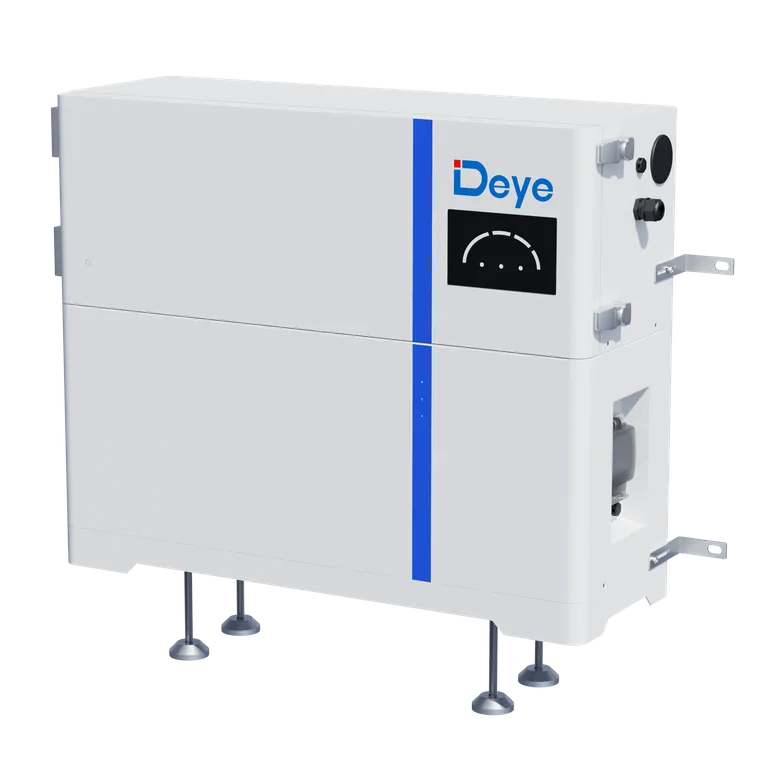
Neither PDU carries a screen or any settings control — both show a five-segment SOC arc plus RUN/ALARM/ERROR LEDs, and every setting is made on the inverter’s touchscreen LCD. See PDU1 vs PDU3.
The inverter comes in single-phase (3.6–10 kW) or three-phase (5–12 kW) variants — the PDU and battery stacking are the same either way.
Linking stacks — when a combiner box is needed
Each stack connects to the next PDU to PDU (OUT → IN) through the built-in parallel interface and DC bus, which Deye’s AU brochure labels “no external combiner box needed”. The brochure pictures the inverter stack with three battery-only (PDU1) stacks chained this way. Deye’s AU PDU1/PDU3 manual (issue 03) documents two-stack systems — PDU3 + PDU3, or PDU3 (master) + PDU1 (slave) — and neither needs a combiner box.
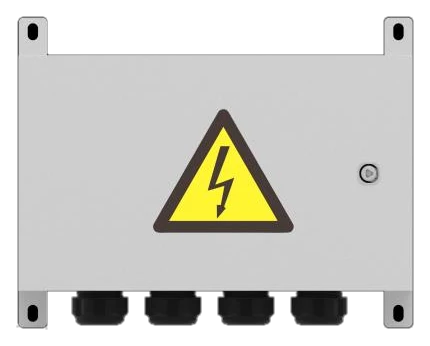
Every all-in-one inverter has a single battery input, and chained stacks share one DC bus back to it. Suncloud’s bank-counting combiner rule is for inverters with two battery inputs and does not carry over to this system. A DC combiner such as the Combiner Box-300A is not part of a standard all-in-one system. Talk to Suncloud before designing a larger system.
Figures are from Deye’s AU documents: the AI-W5.1-B-ESS Series brochure (V1.0, 28 August 2026), the AU single-phase user manual (V1.1.1, 9 July 2026), the AU three-phase user manual (V3.3.1, 10 September 2025), the AU AI-WX-B PDU1/PDU3 user manual (issue 03, 30 March 2026), the all-in-one inverter warranty (Ver1.0) and Deye’s AU/NZ SUN Series 10-year limited warranty (V2.17, July 2026, p.3), which lists all 12 AU all-in-one models. A later three-phase print (Ver 1.1.0, 20 November 2025) lists the AU model names but prints IEC and European grid codes instead of AS/NZS 4777.2, so the V3.3.1 AU edition is linked here. The battery tables inside both linked inverter manuals still print the superseded 4.6 kWh / 90% DoD figures; the current battery figures (5.12 kWh usable at 100% DoD) are on the AI-W5.1-B battery page. The PDU manual’s PDU3 installation steps allow up to six modules per cluster, but the newer AU brochure (August 2026) and AU part list (September 2026) limit the inverter stack to five — design to five. Confirm the exact model variant with Suncloud before quoting or commissioning.
Plan & design
Before anything is ordered — sizing, pairing and design decisions for the AI-W5.1 All-in-One BESS · 3.6–12 kW + up to 50 kWh.
Pairs with
- Guide AC coupling vs DC coupling intermediate · 5 min read
- Guide Matching a battery to a Deye inverter — HV vs LV beginner · 3 min read
- Guide PDU1 vs PDU3 on the AI-W5.1 — and why neither has a screen beginner · 4 min read
- Soon Victoria Emergency Backstop — register a Deye system intermediate · 4 min read
- Soon Parallel inverter installation advanced · Coming soon
Install & commission
On the wall, wired, energised and registered — in the order the job actually runs.
- Guide Commission a Deye system in 5 minutes beginner · 5 min read
- Guide Smart meter wiring made simple intermediate · 5 min read
- Guide SDM120 CT meter ID fix intermediate · 3 min read
- Guide Parallel battery towers with the Combiner Box-300A advanced · 5 min read
- Guide Stacking AI-W5.1-B battery modules beginner · 4 min read
Operate & configure
Monitoring, tariffs, work modes — getting the most out of the system after handover.
- Guide Deye system work modes explained intermediate · 6 min read
- Guide Set up Time-of-Use (TOU) on a Deye system intermediate · 6 min read
- Guide Connect a Deye battery to Amber Electric (Deye Copilot) intermediate · 5 min read
- Guide Deye Copilot — setup, settings and AI strategies intermediate · 7 min read
- Guide Connect a logger to Wi-Fi & DeyeCloud beginner · 5 min read
- Guide 4G logger setup beginner · 3 min read
- Guide Deye warranty explained (AU / NZ) beginner · 5 min read
Troubleshoot
Known issues for this model, worst first — and every fault code it can show.
- Check Battery won't charge or discharge Battery sits idle — not charging from solar or discharging to load — or shows offline / BM…
- Check External meter not communicating (SDM120) The inverter reports no meter / meter offline, even though the SDM120 display is lit.
- Check Import / export readings are reversed DeyeCloud shows the system exporting when the house is drawing power (or the battery charg…
- Check W04 warning — meter address collision (001 / 002) The inverter raises a W04 warning — often right after enabling Grid Tie Meter2, even on a …
- Info Deye fault (F) code reference The inverter LCD or DeyeCloud shows an F-code (e.g. F13, F55, F58) and you need to know wh…
- Info Logger keeps going offline in DeyeCloud The plant shows offline / stale data in DeyeCloud, or the Wi-Fi logger won't connect to th…
Documents
Everything published for the AI-W5.1 All-in-One BESS · 3.6–12 kW + up to 50 kWh — and where something is missing, it says so instead of hiding the row.
System & shared documents
Not specific to the AI-W5.1 All-in-One BESS · 3.6–12 kW + up to 50 kWh — these apply across the range and live here once, not copied per model.
