
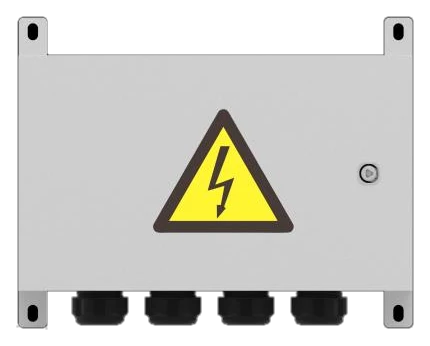
Combiner Box-300A Battery Busbar
Combiner Box-300A
Passive 300 A DC busbar in an IP55 enclosure, rated to 1000 V — parallels up to four battery towers into one inverter battery port, chainable for larger banks. Power only: no electronics, no BMS; battery comms still daisy-chain separately.
- Battery voltage
- Max. 1000 V
- Battery inputs
- 4 (M8 screws)
- Battery outputs
- 2 (M10 screws)
- Max. operating current
- 300 A
- IP rating
- IP55
- Dimensions (W×D×H)
- 420 × 200 × 250 mm
- Weight
- 15 kg
Specifications
Electrical
- Battery voltage range
- Max. 1000 V
- Battery inputs
- 4 (M8 screws)
- Battery outputs
- 2 (M10 screws)
- Max. operating current
- 300 A
General
- IP rating
- IP55
- Operating temperature
- −40 to +60 °C (derates above 45 °C)
- Cooling
- Natural
- Storage temperature
- −40 to +80 °C
- Relative humidity
- 0–95% (non-condensing)
- Altitude
- < 3000 m
- Dimensions (W×D×H)
- 420 × 200 × 250 mm
- Weight
- 15 kg
What it is
A passive DC combiner — copper busbars in an IP55 enclosure. There are no electronics and no BMS inside: it carries power only, so each battery’s communication wiring still daisy-chains separately per the battery manual.
Use it when a big battery bank runs out of terminals on the inverter’s battery port, or when you want many towers brought back to one tidy connection point. Each tower lands on one of the four inputs; the two outputs run to the inverter. Boxes themselves can be paralleled for larger banks — the combiner box guide walks the wiring.
Low- and high-voltage banks
The box is not tied to one voltage class. Deye’s installation guide describes it for combining several low-voltage batteries (typically 40–60 V) or several clusters of high-voltage batteries (typically 180–1000 V), always within the 300 A system limit. Deye’s datasheet shows it on low-voltage wall and stack batteries.
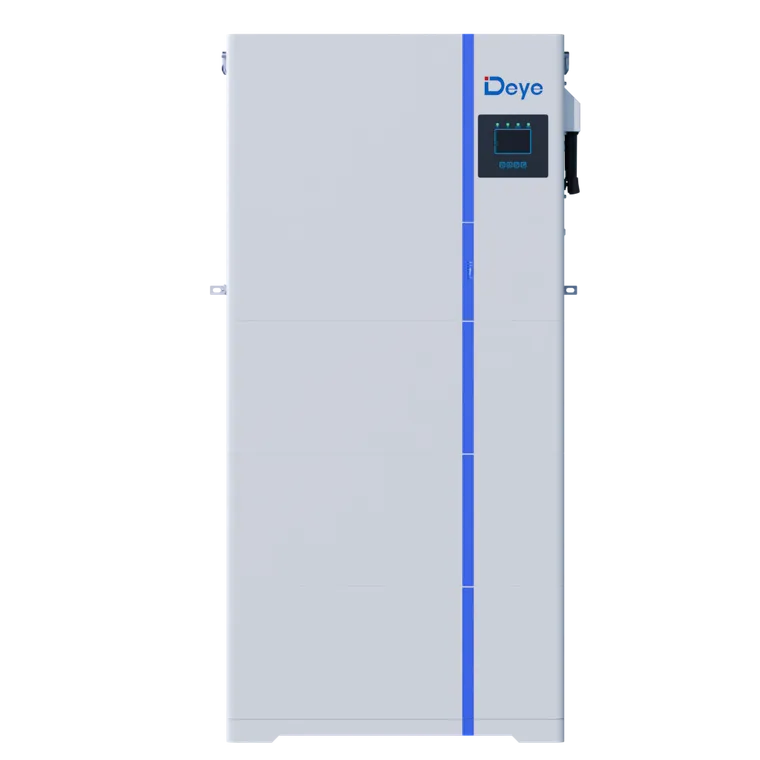
- All-in-one stacks. AI-W5.1-B-ESS stacks link PDU to PDU through the built-in DC bus, so the standard system of one or two stacks needs no combiner. Deye’s datasheet pictures the box beside an all-in-one tower, bringing further battery stacks back to one connection point. Confirm with Suncloud whether a larger system needs one.
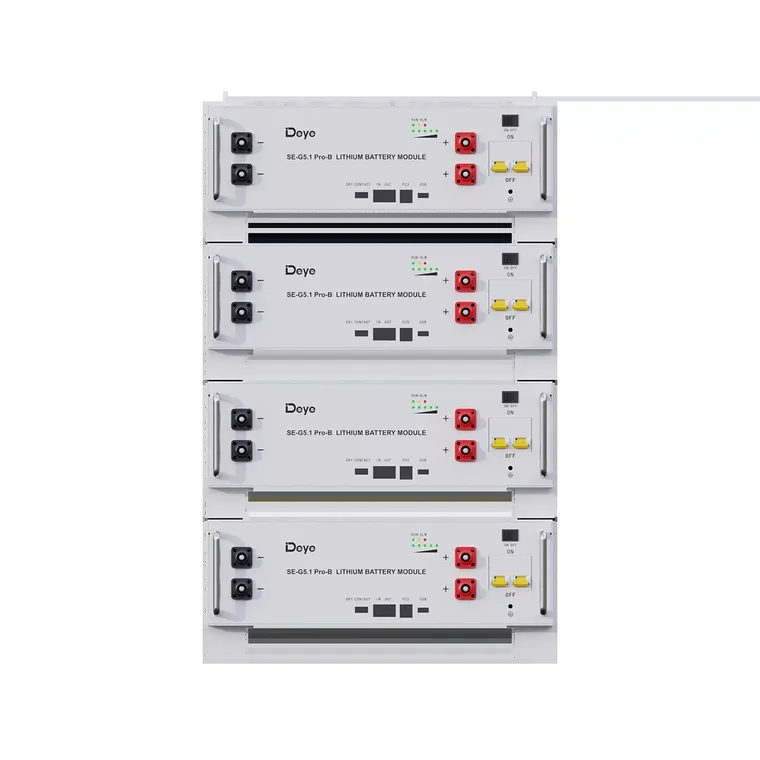
- SE-G5.1 Pro-B rack batteries. The SE-G5.1 Pro-B manual connects a multi-pack bank to the inverter through a common DC+/DC− busbar but does not name a busbar part. Confirm with Suncloud whether a given bank needs this box, and how many.
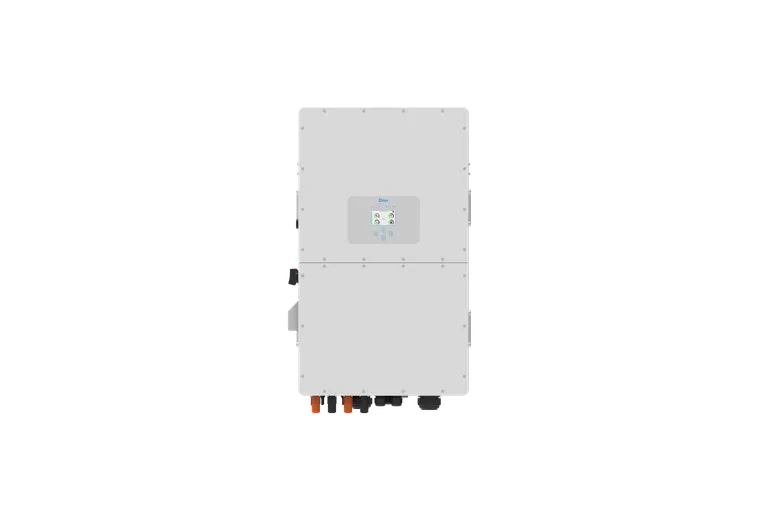
- Inverters with two battery inputs, such as the SUN-29.9–50K. Suncloud’s rule, confirmed with Deye HQ in September 2026, counts battery banks, not modules. One bank feeds both battery inputs, and a combiner is needed only if that bank presents a single set of power terminals. Two banks take one input each, with no combiner. Three or more banks are combined.
For any other arrangement, confirm the bank wiring with Suncloud at quote stage.
Figures are from the Deye Combiner Box-300A datasheet (V1.1, 28 March 2023) and the Combiner Box-300A installation guide (31 March 2023). The two disagree on humidity: the datasheet prints “0 ~ 95 (condensing)”, while the later installation guide gives 0–95% non-condensing. This page follows the installation guide. Confirm the bank arrangement and cable sizing with Suncloud before quoting or installing.
Plan & design
Before anything is ordered — sizing, pairing and design decisions for the Combiner Box-300A Battery Busbar.
Pairs with
Install & commission
On the wall, wired, energised and registered — in the order the job actually runs.
Documents
Everything published for the Combiner Box-300A Battery Busbar — and where something is missing, it says so instead of hiding the row.
System & shared documents
Not specific to the Combiner Box-300A Battery Busbar — these apply across the range and live here once, not copied per model.
