
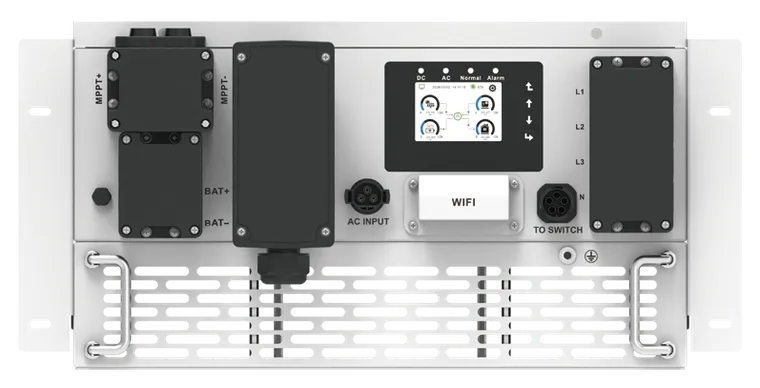
100/125 kW PCS + MPPT + STS · Modular C&I Power Conversion
SUN-100K / SUN-125K-PCS01HP3-AU · SUN-MPPT-L01-AU-AM8 · SUN-STS500L
100–125 kW
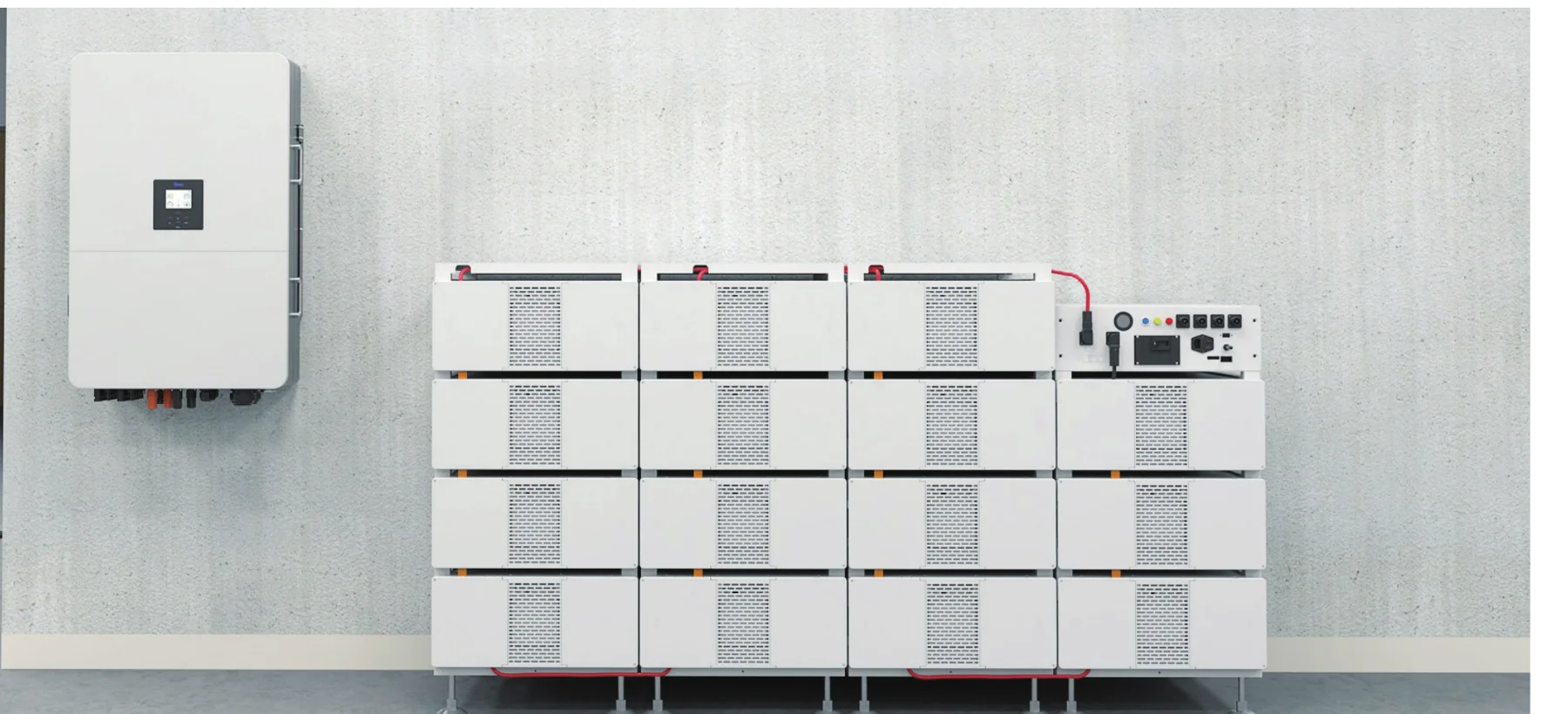
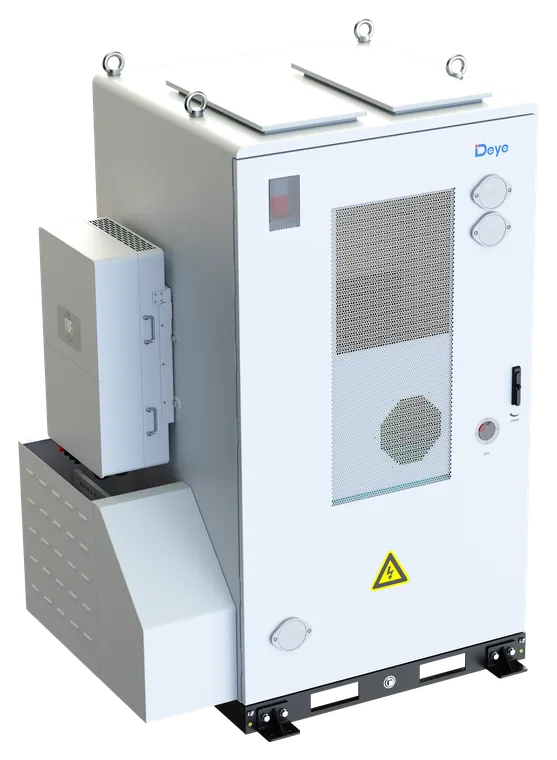
Deye's modular power conversion system for large C&I storage. A 100 or 125 kW three-phase PCS takes one 630–1000 V lithium battery input. An optional 8-tracker MPPT module adds up to 200 kWp of PV (160 kW max. input) on the DC side, and an optional 500 kW static transfer switch (STS) adds grid, load and generator ports with under-10 ms off-grid switching. Five STS modules in parallel carry up to 25 × 100 kW or 20 × 125 kW PCS (2.5 MW). Pairs with BOS-B Pro-A3 racks (Deye allows 14–16 packs per cluster) or GE-F256 cabinets.
- Building blocks
- PCS 100 or 125 kW · MPPT module 200 kWp PV (optional) · STS 500 kW (optional)
- Rated AC power (PCS)
- 100 / 125 kW, three-phase 230/400 V or 240/415 V
- Battery voltage range
- 630–1000 V, one battery input per PCS
- Max. charge / discharge current
- 175 A (100 kW) · 200 A (125 kW)
- PV input (MPPT module)
- Up to 200 kWp array, 160 kW max. input per module · 8 trackers × 40 A · 800 V max.
- Off-grid switching (STS)
- <10 ms · grid, load and generator ports rated 500 kW each
- Scalability
- Up to 5 × 100 kW or 4 × 125 kW PCS per STS · five STS in parallel for 2.5 MW
- Max. efficiency
- PCS 98.5% (Euro 97.8%) · MPPT >99%
- Warranty
- PCS: 5 years standard, extendable · MPPT module and STS: 10 years
Specifications
System
- Components
- SUN-100K-PCS01HP3-AU or SUN-125K-PCS01HP3-AU power conversion system (PCS) · SUN-MPPT-L01-AU-AM8 PV module (optional) · SUN-STS500L static transfer switch (optional)
- Model names
- PCS: SUN-100K/125K-PCS01HP3-AU (Deye's AU brochure, AU manual and AU catalogue) · SUN-100K/125K-PCS01HP3 (Deye's EN manuals). MPPT: SUN-MPPT-L01-AU-AM8 (Deye's AU documents) · SUN-MPPT-L01-EU-AM8 (Deye's EN manuals). Suncloud's order codes use the older SUN-100K/125K-PCSL01HP3 name, which Deye's March 2025 brochure rates differently — confirm the exact model suffix before ordering
- Operating modes
- PCS only · PCS + MPPT · PCS + STS · PCS + MPPT + STS
- MPPT module compatibility
- SUN-MPPT-L01-AM8 only. Deye does not recommend the SUN-MPPT-L01-AM10 with the PCS01HP3
- MPPT modules per PCS
- 1 (the PCS has one MPPT input)
- PCS per STS
- Up to 5 × 100 kW or 4 × 125 kW (500 kW)
- Max. system
- Five STS in parallel: 25 × 100 kW or 20 × 125 kW PCS (2.5 MW)
- Parallel PCS
- All PCS in parallel must be the same model · each PCS needs its own battery set
- Battery clusters per PCS
- Up to 16 in parallel. More than three must land on a DC busbar (no daisy-chaining)
- Overload capability
- Instantaneous peak up to 200% of rated power · 2 × peak output for 12 s in off-grid mode
- Continuous off-grid load
- Keep below 70% of the PCS rated power for stable off-grid operation
- Energy management
- Built-in EMS: zero export (via a CT, a PCS meter, an STS meter or the STS's internal CT), export limit, grid peak shaving, time-of-use charge/discharge
- Monitoring
- Deye Cloud via a Wi-Fi or 4G data logger
- DRM port
- DRM0 only
- Grid-code presets
- Australia A, Australia B, Australia C and New Zealand
- Grid regulation
- AS/NZS 4777.2 (Deye's AU brochure, AU manual and AU catalogue) · confirm grid-connection approval for the exact variant with Suncloud before quoting
- Warranty
- PCS: standard 5 years, extendable (Deye AU PCS brochure V1.0, 2026-09-03) · STS: 10 years (same brochure) · MPPT module: 10 years (Deye AU/NZ SUN Series warranty V2.17, which lists SUN-MPPT-L01-AU-AM8)
PCS module — SUN-100K / SUN-125K-PCS01HP3-AU
- Battery type
- Lithium-ion (self-adaption to BMS)
- Battery voltage range
- 630–1000 V
- Max. charging current
- 175 A / 200 A
- Max. discharging current
- 175 A / 200 A
- Number of battery inputs
- 1
- DC input from MPPT module
- 630–1000 V, max. 200 A
- Rated AC input/output active power
- 100 / 125 kW
- Max. AC input/output apparent power
- 100 / 125 kVA
- Rated and max. AC current
- 145.0 A / 181.2 A
- Max. output fault current
- 350 A
- Max. output overcurrent protection
- 450 A
- Rated voltage / range
- 230/400 V, 240/415 V · 0.85–1.1 Un
- Grid connection
- 3L + N + PE
- Grid frequency / range
- 50 Hz (45–55 Hz)
- Power factor adjustment range
- −1 to +1
- THDi
- <3%
- DC injection current
- <0.5% In
- Max. efficiency
- 98.5%
- Euro efficiency
- 97.8%
- Integrated protection
- AC output over-current, over-voltage and short-circuit protection · thermal protection · insulation impedance detection · anti-islanding · residual current detection
- Surge protection
- Type II (DC), Type II (AC)
- Display / communication
- LCD · Wi-Fi, RS485, CAN, meter
- Operating temperature
- −40 to +60 °C (derating above 45 °C)
- Humidity / altitude
- 0–95% · 4000 m
- Noise
- <75 dB
- Ingress protection
- IP65
- Topology / overvoltage category
- Non-isolated · OVC II (DC), OVC III (AC)
- Cooling
- Intelligent air cooling
- Dimensions (W×H×D)
- 543 × 310 × 775 mm (excluding connectors and brackets)
- Weight
- 81.86 kg (Deye's AU brochure, AU catalogue and 2026-09-15 EN manual) · the older PCS + MPPT + STS manuals (AU 2025-09-30, EN 2025-12-26) print 70.35 kg
- Safety / EMC
- IEC/EN 62109-1, IEC/EN 62109-2, IEC/EN 62477-1
MPPT module — SUN-MPPT-L01-AU-AM8
- Max. PV array (access) power
- 200 kW
- Max. PV input power
- 160 kW (Deye's AU brochure, 2026-09-03, and 2026-09-15 EN manual) · the older PCS + MPPT + STS manuals and the AU catalogue print 200 kW as the max. PV input power
- Max. PV input voltage
- 800 V
- Start-up voltage
- 200 V
- MPPT voltage range
- 180–750 V
- Full-load MPPT voltage range
- 450–750 V
- Rated PV input voltage
- 600 V
- No. of MPP trackers
- 8
- Max. operating PV input current
- 40 A per tracker
- Max. input short-circuit current
- 60 A per tracker
- DC output to PCS
- 630–1000 V, max. 200 A
- Max. efficiency / MPPT efficiency
- >99% / >99.9%
- Protection
- DC input reverse protection · DC input switch · Type II surge protection · DC arc protection and anti-PID optional
- Operating temperature
- −40 to +60 °C
- Humidity / altitude
- 0–95% · 4000 m
- Ingress protection / overvoltage category
- IP65 · OVC II
- Dimensions (W×H×D)
- 543 × 198 × 700 mm
- Weight
- 41.75 kg
- Cooling
- Intelligent air cooling
- Terminals / display / communication
- OT terminals · LED · CAN/RS485
- Safety / EMC
- IEC/EN 62109-1
STS module — SUN-STS500L
- Rated power — grid/PCS, load and generator sides
- 500 kW each
- Rated current
- 725 A per side
- Rated voltage
- 230/400 V, 240/415 V
- Grid connection / frequency
- 3L / N / PE · 50 Hz
- Off-grid switching time
- <10 ms (Deye's AU brochure, AU catalogue and EN manual of 2025-12-26) · the earlier AU manual (2025-09-30) gives <20 ms
- Parallel STS on the load side
- Max. off-grid load 700 kW when several STS are paralleled through their load terminals
- Operating temperature
- −25 to +60 °C
- Humidity / altitude
- 0–95% · 4000 m
- Ingress protection / overvoltage category
- IP20 · OVC III
- Dimensions (W×H×D)
- 543 × 575 × 671 mm
- Weight
- 108 kg
- Cooling
- Natural cooling
- Terminals / communication
- OT terminals · CAN/RS485
- Safety / EMC
- IEC/EN 61439-1/-2
Installation
- Mounting
- Floor-standing brackets, one per module, or one combined PCS + MPPT + STS frame with the STS on top
- Siting
- Sheltered from direct sunlight, rain, snow and lightning (the STS is IP20)
- Battery-side protection
- Separate DC over-current protector or disconnect between the battery and the PCS, unless the battery has a readily accessible internal DC breaker
- External AC breaker (PCS without STS)
- 225 A / 400 V per PCS, certified to IEC 60947-1 and IEC 60947-2
- AC and battery cables (PCS)
- 70 mm² for the 100 kW · 95 mm² for the 125 kW
- PV side (MPPT module)
- PV junction box with surge protection required · DC breaker between the PV strings and the MPPT module recommended · PV+ and PV− must not be grounded
- STS–PCS communication cable
- Under 10 m when using Ethernet cable
- Clearance to a BOS-B Pro-A3 rack
- Min. 300 mm between the battery system and the PCS
- Battery accessory kit
- One BOS-B-AP-A per BOS-B Pro-A3 cluster · one GE-F256-AP-C per GE-F256 cabinet
Highlights
- Modular, not all-in-one. The PCS is the battery inverter. PV connects through a separate MPPT module on the DC side, and backup and generator switching run through a separate STS. Build only what the site needs: PCS only, PCS + MPPT, PCS + STS, or all three.
- 100 or 125 kW per PCS, 2.5 MW per system. One STS carries up to five 100 kW or four 125 kW PCS (500 kW). Five STS in parallel reach 2.5 MW with 25 × 100 kW or 20 × 125 kW PCS.
- High-voltage battery window. Each PCS takes one 630–1000 V lithium battery input at up to 175 A (100 kW) or 200 A (125 kW), with up to 16 battery clusters in parallel.
- Up to 200 kWp of PV per MPPT module. 160 kW max. input, eight trackers at 40 A each, 800 V max. input voltage and more than 99.9% MPPT efficiency. The module feeds the PCS over a 630–1000 V DC link.
- Under-10 ms backup switching. The STS has separate grid, load and generator ports, each rated 500 kW.
- EMS built in. Zero export or an export limit (via a CT, a meter or the STS’s internal CT), grid peak shaving and time-of-use charging and discharging, with no separate EMS. Monitoring runs through Deye Cloud.
- IP65 PCS and MPPT modules with intelligent air cooling, rated from −40 °C to +60 °C. The PCS derates above 45 °C.
- Warranty. The PCS carries a standard 5-year warranty that can be extended (Deye’s AU PCS brochure, September 2026). The STS carries 10 years, and the MPPT module 10 years under Deye’s AU/NZ SUN Series warranty (V2.17).
The three modules
| Module | Model | Rating | IP | W × H × D | Weight |
|---|---|---|---|---|---|
| PCS | SUN-100K / SUN-125K-PCS01HP3-AU | 100 / 125 kW AC · 630–1000 V battery | IP65 | 543 × 310 × 775 mm | 81.86 kg ¹ |
| MPPT | SUN-MPPT-L01-AU-AM8 | 200 kWp PV · 8 trackers | IP65 | 543 × 198 × 700 mm | 41.75 kg |
| STS | SUN-STS500L | 500 kW per port · <10 ms | IP20 | 543 × 575 × 671 mm | 108 kg |
¹ From Deye’s AU brochure (2026-09-03), AU catalogue and 2026-09-15 EN manual. The older PCS + MPPT + STS manuals (AU 2025-09-30, EN 2025-12-26) print 70.35 kg.
Battery pairing
- BOS-B Pro-A3 indoor rack. Deye’s AU PCS brochure allows 14–16 packs per cluster on-grid and 15–16 packs off-grid for a PCS without an MPPT module. With an MPPT module, it allows 16 packs for a PV open-circuit voltage up to 800 V, 15 packs up to 750 V and 14 packs (on-grid only) up to 700 V. A 16-pack cluster (819.2 V nominal, 257.23 kWh) has an operating range of 665.6–934.4 V, which sits wholly inside the PCS’s 630–1000 V battery window. Scaled from the manual’s table (41.6 V per pack at the bottom of the range), 15 packs bottom out at 624 V and 14 packs at 582.4 V, both below 630 V. Confirm any cluster shorter than 16 packs with Suncloud. Each cluster takes one BOS-B-AP-A accessory kit, the version made for the 100/125 kW PCS.
- GE-F256 outdoor cabinet. Deye’s AU ORION E brochure lists the GE-F256-BC-2-A3 cabinet with a SUN-125K-PCS01HP3-AU, the SUN-MPPT-L01-AU-AM8 and the SUN-STS500L as a 125 kW / 257 kWh, two-hour system. Each cabinet takes one GE-F256-AP-C accessory kit, the kit made for the 100/125 kW PCS.
- Never with the BOS-B Pro-A3 outdoor cabinet. Deye’s September 2026 guidance allows only a hybrid inverter with that cabinet, never a standalone PCS.
Design rules
- Grid connection in Australia. Deye’s AU brochure, AU manual and AU catalogue list AS/NZS 4777.2 as the PCS’s grid regulation. For AS/NZS 4777.2:2020 compliance, the AU manual says to select the Australia A, B or C or New Zealand grid code. The DRM port supports DRM0 only. Before you quote a grid-connected site, confirm the grid-connection approval for the exact PCS variant with Suncloud.
- PV open-circuit voltage. The PV string open-circuit voltage must stay below the battery cluster voltage at 0% SOC and within the MPPT module’s 800 V maximum. This is why the PV string design sets the minimum pack count per cluster.
- Off-grid loads. For stable off-grid operation, keep the continuous off-grid load below 70% of the PCS rated power. Deye rates the PCS for an instantaneous peak of up to 200% of rated power, and quotes 2 × peak output for 12 seconds in off-grid mode. Where several STS are paralleled through their load terminals, the off-grid load is limited to 700 kW.
- More than three clusters. When more than three battery clusters connect in parallel, do not daisy-chain them. Bring each one to a DC busbar and run a single connection from the busbar to the PCS.
- Parallel PCS. Every PCS in a parallel system must be the same model, and each PCS needs its own battery set.
- DC and AC protection. Fit a separate DC over-current protector or disconnect between the battery and each PCS, unless the battery has a readily accessible internal DC breaker. Without an STS, fit a separate AC breaker between each PCS and the grid; Deye recommends 225 A / 400 V. The recommended AC and battery cable is 70 mm² for the 100 kW and 95 mm² for the 125 kW.
- PV side. Deye requires a PV junction box with surge protection, and recommends a DC breaker between the PV strings and the MPPT module. Do not ground PV+ or PV−, and do not connect PV modules that can leak current to earth.
- Generator without an STS. For off-grid sites without an STS, the PCS’s Gen On-Grid mode lets a diesel generator connect to the PCS AC port as the grid source. Deye requires reverse-power protection so the PCS cannot back-feed the generator.
- Siting. Install the modules sheltered from direct sunlight, rain, snow and lightning; the STS is only IP20. Keep at least 300 mm between a BOS-B Pro-A3 rack and the PCS. If the STS and PCS communicate over Ethernet cable, keep the run under 10 m.
- MPPT module version. Use the SUN-MPPT-L01-AM8 with the PCS01HP3. Deye’s newer PCS + ACDC + MPPT manual says the SUN-MPPT-L01-AM10 is not recommended with this PCS.
Figures are from Deye’s BOS-B Pro-A3 Solution Series brochure for the 100–125 kW PCS (AU, V1.0, 2026-09-03), the PCS + MPPT + STS user manuals (AU, V1.1.0, 2025-09-30; EN, V1.1.0, 2025-12-26), Deye’s AU product catalogue (v4.3, 2026, pp. 51–52), the BOS-B Pro-A3 user manual (EU/AU, V08, 2026-08-10), the ORION E GE-F128/F240/F256 + PCS 100–125 kW brochure (AU, V1.0, 2026-09-04) and Deye’s AU indoor/outdoor configuration list (V1.0, 2026-09-10). The AM10 note, the 81.86 kg PCS weight and the 160 kW MPPT input figure are also in the newer PCS + ACDC + MPPT user manual (EN, 2026-09-15 edition). The older PCSL01HP3 name, with different ratings, is from Deye’s 100 kW–2.5 MW C&I ESS brochure (V1.0, 2025-03-21). Where Deye’s documents differ (PCS weight, MPPT input power, STS switching time), the figure from the newest documents is shown first and the older figure is noted. The warranty is as listed in Deye’s SUN Series 10-year limited warranty for Australia and New Zealand (V2.17, July 2026, p.3), which lists SUN-100/125K-PCS01HP3-AU, SUN-MPPT-L01-AU-AM8 and SUN-STS500L. Deye’s AU PCS brochure (V1.0, 2026-09-03), which is newer, prints “Standard 5 years, extendable warranty” in its PCS table (p.5) and 10 years for the STS (p.4). Confirm the model suffix, grid-connection approval and cluster size with Suncloud before quoting.
Plan & design
Before anything is ordered — sizing, pairing and design decisions for the 100/125 kW PCS + MPPT + STS · Modular C&I Power Conversion.
Pairs with
Operate & configure
Monitoring, tariffs, work modes — getting the most out of the system after handover.
Documents
Everything published for the 100/125 kW PCS + MPPT + STS · Modular C&I Power Conversion — and where something is missing, it says so instead of hiding the row.
System & shared documents
Not specific to the 100/125 kW PCS + MPPT + STS · Modular C&I Power Conversion — these apply across the range and live here once, not copied per model.
